We can always take a step back to keep balance
Learning to pause, reflect, and build technology that grows with us, not past us.
A Tech Perspective
Balance has always been part of human understanding. From ancient philosophy to modern science, we keep returning to it because both life and systems depend on it. Technology reflects this search for balance, finding the right point between effort and outcome, complexity and clarity, speed and safety.
The engineers and scientists who advance our field work with remarkable dedication to solve real problems. Their innovations have lifted billions out of hardship, connected distant communities, and opened doors to knowledge that once seemed impossible to reach. Yet even the most thoughtful progress brings new questions. Taking a step back to consider these questions is not a critique of their work. It is part of continuing it wisely.
From Abstraction to Automation
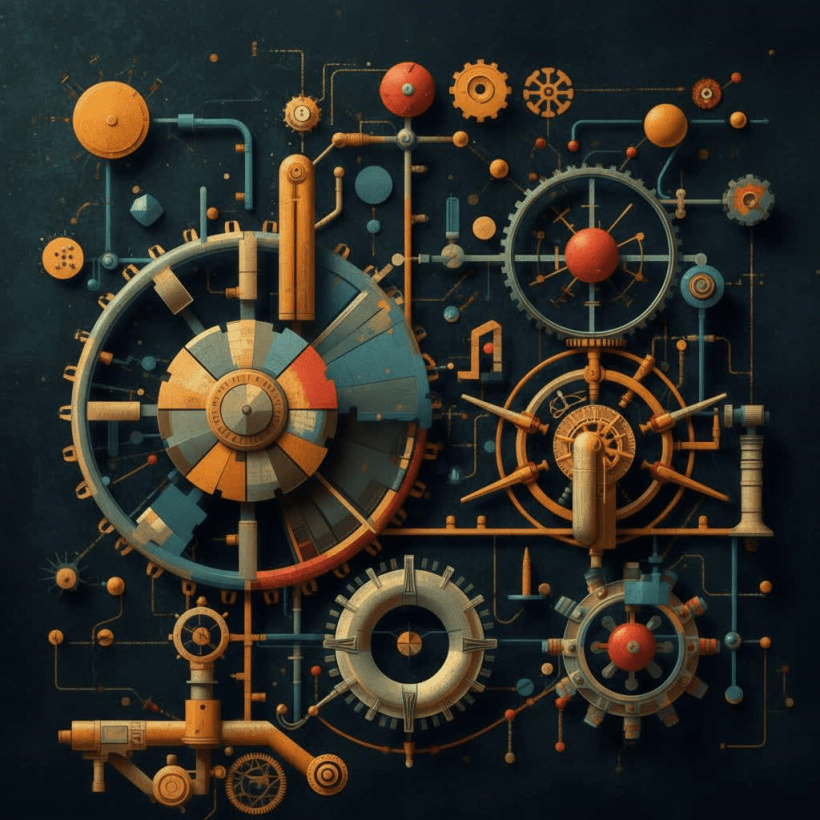
Looking back at the history of information technology, progress has been shaped by one elegant principle: abstraction. Engineers learned to manage complexity by creating layers that hide intricate details. Operating systems hid hardware complexity, virtualization hid server management, and the cloud hid infrastructure entirely. Each layer gave us more capability with less friction.
In Construction on Abstraction, <https://web.archive.org/web/20250125131141/https://www.stackmasters.eu/blog/construction-on-abstraction/> I reflected on how modern IT is built on these layers and on the discipline to divide large systems into smaller, manageable parts. This approach brought extraordinary flexibility and scale. It also created something subtle: distance between user and mechanism. Each new layer made systems easier to use, which is exactly what good engineering should do. But it also meant fewer people needed to understand what happens beneath the surface.
This distance is not a flaw, it is the point. Abstraction succeeds precisely because we don’t need to know how the engine works to drive the car. The challenge is ensuring we can look under the hood when it matters. Good abstraction hides complexity without hiding consequence.
When Speed Becomes the Only Measure
In the last decade, technology has moved at breathtaking pace. The mantra of “move fast” shaped how we build and how we work. Speed became a primary indicator of success. The results have been remarkable, breakthroughs that once took years now happen in months.
But speed without direction is just motion. When we optimize only for velocity, we create less space for the questions that give technology its purpose. Not every moment needs deep reflection, but some moments do. Systems that evolve to automate, predict, and optimize before we even ask are impressive feats of engineering. They also leave little room for pause.
The issue is not speed itself. Fast iteration, rapid prototyping, and quick deployment have solved countless problems. The question is whether we are also creating time to ask: What are we building? For whom? And what changes when it arrives?
AI as the Next Abstraction
Artificial Intelligence represents the next stage of abstraction, and it is profound. Previous abstractions hid technical complexity; servers, networks, code. AI abstracts something different: reasoning itself. We no longer need to know the steps of analysis or the path to an answer. We describe what we need, and the system responds.
The scientists and engineers developing these capabilities are doing extraordinary work. They are creating tools that can diagnose disease, translate languages in real time, and help people learn in ways previously impossible. This is not work to be taken lightly.
In the same way cloud computing made us independent of managing physical resources, AI offers independence from routine cognitive effort. This is genuinely liberating for many tasks. But independence from effort is different from independence of understanding. When we stop knowing how answers are reached, we become dependent on systems we cannot fully evaluate.
True independence requires maintaining the capacity to think through problems, even when we choose to delegate them. This is not about mistrusting AI; t is about staying engaged with the work it does on our behalf.
Building Awareness Into Systems
Balance in technology is both a personal practice and a design principle. The most thoughtful engineers already build with this in mind.
Good systems anticipate needs but leave space for human judgment. They simplify complexity without oversimplifying decisions. They automate routine work but remain explainable when questions arise. This kind of balance requires awareness; awareness of purpose, of consequences, of the people who will use what we build.
It is what separates a system that helps us from one that quietly replaces our thinking. And it is hard work. It is easier to optimize for a single metric than to balance competing values. The engineers who take on this challenge deserve recognition for doing the more difficult thing.
Where Balance Lives
Where does balance truly exist? Is it in the precision of our tools, or in the awareness of how we use them? We often think of equilibrium as something built into the systems themselves, a technical property, a design feature.
But balance begins in the mind. It is the quiet space between action and awareness, between what we can control and what we choose to understand. Like riding a bicycle, balance is not a fixed point we reach but a continuous adjustment we make.
As technology grows more capable, staying aware becomes harder. We naturally trust systems that consistently deliver good results. Little by little, we stop questioning. This is human nature, not a failure. The challenge ahead is not to gather more information, but to cultivate a different kind of awareness, one that sees both the power and the limits of what we build.
Equilibrium may not be a destination, but it can be a practice. A way of thinking that keeps curiosity alive, even when answers come easily.
Taking a Step Back
Sometimes balance means slowing down. Not stopping, but creating deliberate pauses to understand what we are building and why. In a world driven by constant acceleration, this might be the hardest thing to do. It can feel like falling behind.
Yet every stable system, from ancient cities to modern networks, requires moments of equilibrium. In life and in technology, the same principle applies. Stability comes from rhythm, not rush. From knowing when to sprint and when to reflect.
This is not about resisting progress. The engineers and scientists advancing our capabilities are making genuine contributions to human wellbeing. It is about ensuring that progress has time to integrate, that we grow alongside the tools we create, rather than being left behind by them.
The Timeless Pattern
Across centuries, humans have sought the same truth under different names: harmony, equilibrium, the golden mean, the middle way. Our current age is defined by rapid progress, and that progress has accomplished extraordinary things.
But progress alone is not the measure of maturity. The real sign of wisdom is the ability to pause, observe, and adjust. As technology continues to expand its reach into our thoughts, our work, and our decisions, maintaining balance might be the most human act of all.
We can always take a step back. Not to retreat, but to see more clearly. Not to slow others down, but to make sure we are moving in a direction we understand. The work of building the future is too important to do without reflection. And the people doing that work, the engineers, the scientists, the builders, deserve our support in making time for both speed and thoughtfulness.
Because technology that grows with us, not past us, requires both the brilliant minds that create it and the collective wisdom to guide it well.