Two Days in Amsterdam for training.
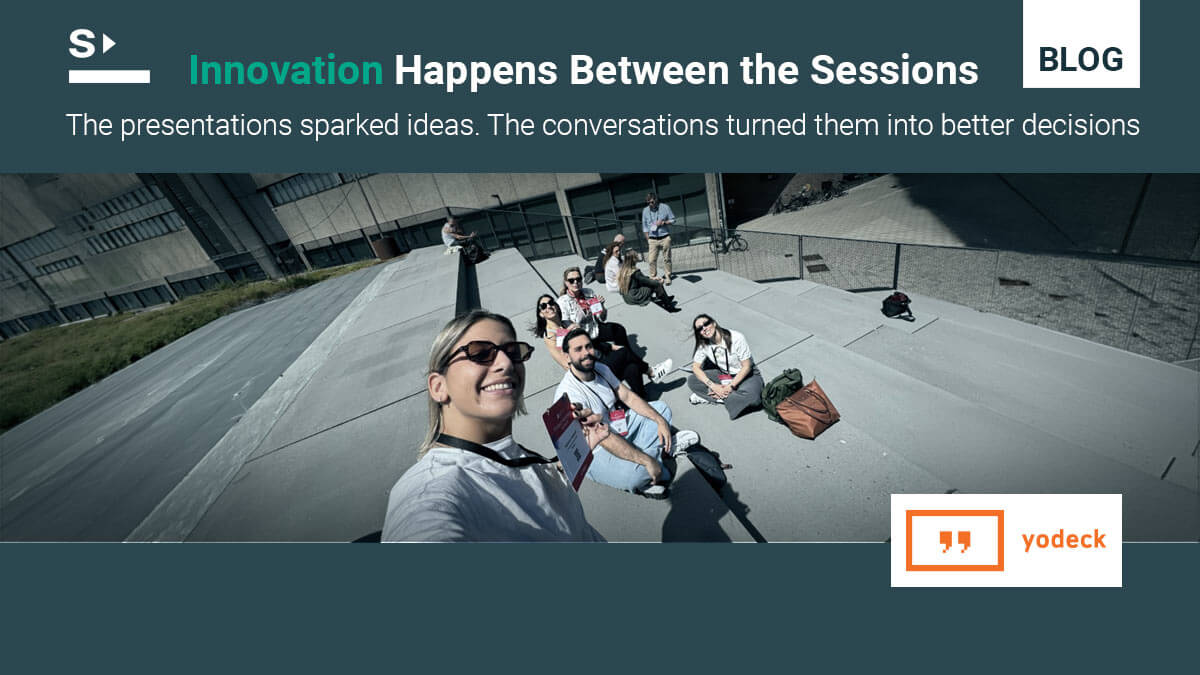
One person comes back with notes. A team comes back with new ideas.
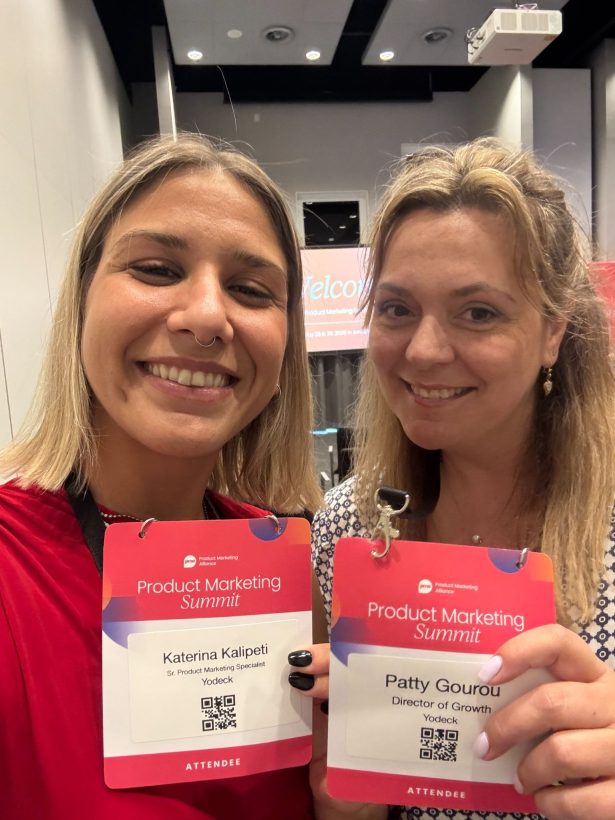
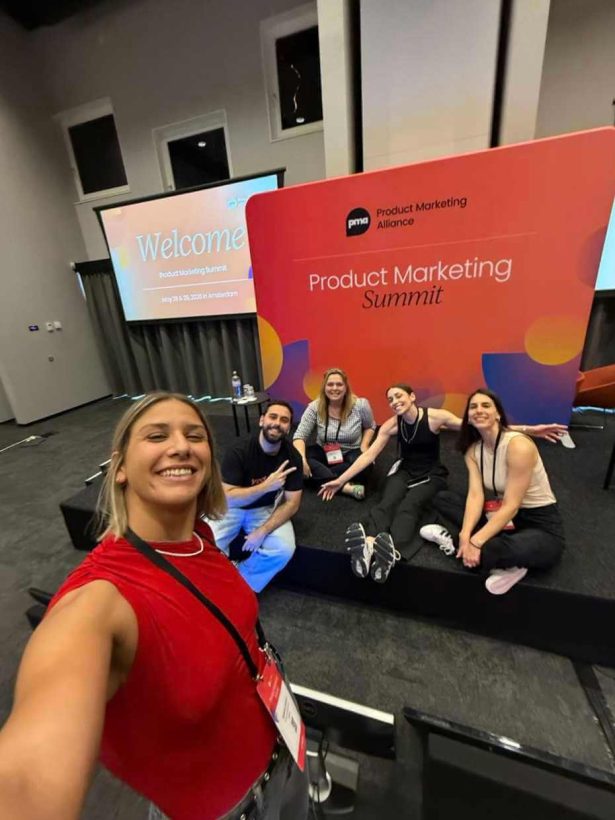
Before the Product Marketing Summit, Patty made a decision I didn’t fully appreciate at the time. Instead of sending just one of us to Amsterdam to take notes, she sent the whole team. By the end of the second day, it was obvious why.
The sessions were valuable, but that’s not where the biggest ideas came from. They came from everything in between: the coffee breaks, the walk back to the hotel, the conversations that started with, “Wait… have we been looking at this the wrong way?”
So instead of just sharing information from the presentations, we’re going to share what triggered internal debates.
For context, Yodeck is a cloud-based digital signage platform. I work on the channel side of the business, where our customers are mostly AV integrators and IT companies who resell Yodeck to their own customers.
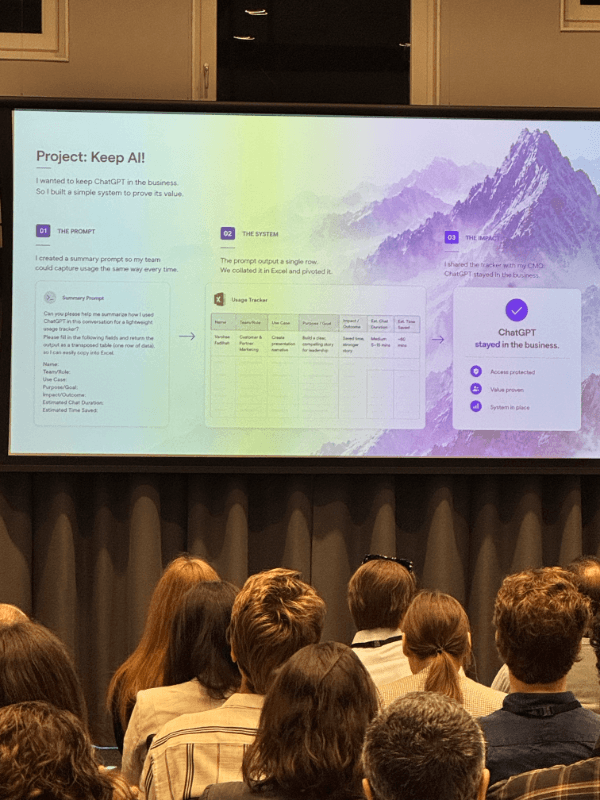
Build systems, not prompts (Varshaa Pallaath)
Katerina: You needed to be in that room. He built ten open-source AI experiments. A whole operating system for product marketing. Signal, then synthesis, then pipeline, then agentic on top.
Dimitris: What’s in it?
Katerina: A competitor decoder. A positioning builder. A persona generator. And an asset generator that scores its own output, then rewrites itself in a loop.
Dimitris: The asset generator. That’s the one. Point it at partner content and we’d never run out of ideas.
Katerina: That’s exactly the part he warned everyone about. The point wasn’t to build prompts. It was to build systems. The asset generator is the last layer. It only works because everything underneath it is trustworthy. Start at the output, and you’ve just built a faster way to generate confident garbage.
Dimitris: …So I immediately did the one thing he told everyone not to do.
Katerina: Haha, in about four seconds. Which is why we start where he started. Signal layer first.
She was right. I’d gone straight for the shiny end of the system because that’s what everyone notices first. But the repository is public (github.com/varshp/marketer-that-ships), and the real lesson isn’t the agent that writes. It’s the layers beneath it. The impressive output is just the visible tip. The work begins with signal – whether your inputs are actually true.
Katerina is our Sr. Product Marketing Specialist.
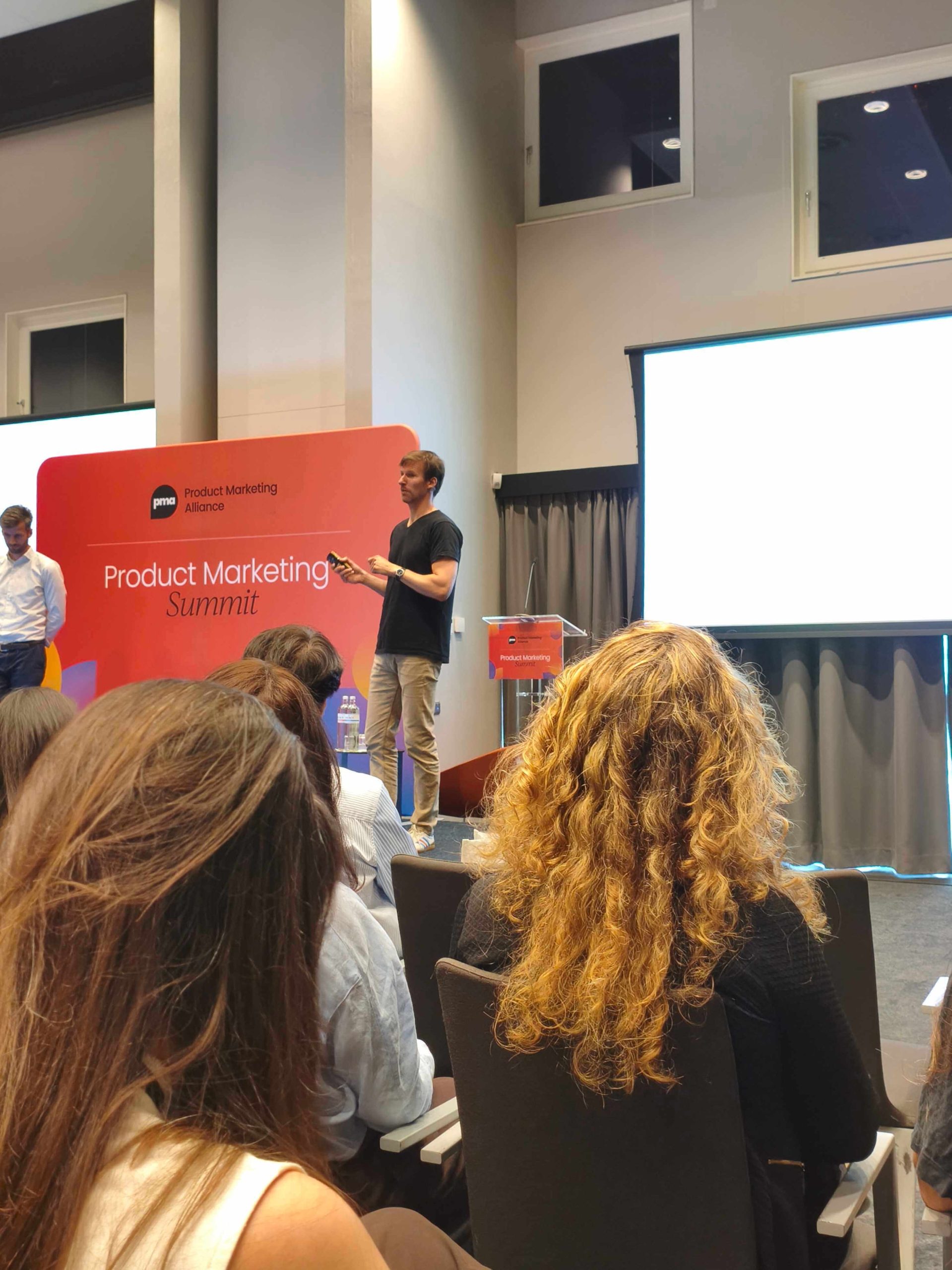
The ICP I got wrong on stage (Marcel Stroop and Corjan Bast)
This one I was in. I asked a question out loud at the end.
Dimitris: We’ve got thousands of partners. I found the best performers, looked at what they share and built our Ideal Partner Profile from that. Reverse-engineered from the winners. What’s your take on that?
Marcel: You’ve described your past, not your market. We start from the problem the product solves, then find the persona that has it. The persona with the problem and the one who happened to succeed with you are not always the same person.
I sat back down. Patty leaned over.
Patty: That’s why some partners look perfect on paper and go nowhere. They match the profile of who won before. The profile never asked whether they have the problem we solve.
It stung, because it felt clever when I did it. And it was clever: it just answered a part of the question, Marcel gave us the whole picture.
Patty is our Director of Product Marketing & Managed Growth
We’re not a channel problem (Akshatha Hegde)
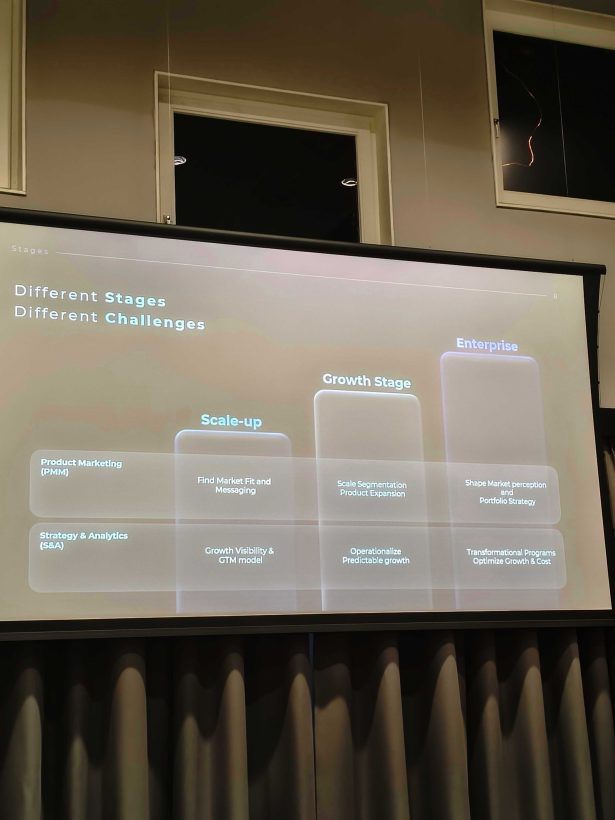
Akshatha drew a line with three points. Scale-up, Growth Stage, Enterprise. That puts Yodeck in the first one: managing complexity without losing focus, expansion pulling against efficiency.
Dimitris: This reframes my whole week. My channel positioning question isn’t a channel problem.
Naya: What is it then?
Dimitris: It’s a growth-stage problem. Mature segmentation, multi-product positioning, expansion messaging, competitive differentiation. That’s her list for this stage. It’s also mine. I’ve been calling it “the channel needs better positioning” when it’s “the company hit the stage where positioning gets hard for everyone.”
Naya: Hmm, that’s either a real insight or a way to make your problem sound like everyone’s problem.
Dimitris: Well, look at her metrics. NRR, sales efficiency, gross margin, forecast accuracy. None of those are channel metrics. And one line I wrote down word for word: “Alignment is a growth multiplier as complexity scales faster than headcount.”
Naya: …that one I can’t argue with. We grow super fat, and the work is becoming more complex faster than we’re adding people, and it’s starting to create bottlenecks.
This was the one where I was right and Naya was the cautious one. She wasn’t wrong to check me. My zoom-outs aren’t always load-bearing but this one held. The channel question is only a sign of a bigger issue: where we are as a company.
Naya is our Direct Growth Manager.
The same fight, one layer removed (Lindsay Brennan)
Lindsay put up two columns. Marketing Says, Sales Says. Marketing: sales never follows up, no visibility after the handoff. Sales: the leads are garbage, the CRM eats my time, the leads are cold. The room laughed, because everyone had said at least one.
Her point: it looks like a culture problem and it isn’t. It’s structural. Intake, handoff, feedback loop. All fixable. And product marketing can be the bridge, because you understand both the market signal and the go-to-market motion.
Anna Maria: That’s my job description on a slide. The bridge part. I can fix intake and the feedback loop without asking anyone’s permission.
Dimitris: It’s bigger than internal, though. For us it’s not just marketing and sales. It’s us and the partners too. Same two columns, one layer removed. We worry that partners don’t follow up, that they do not chase new customers. The Partners say their leads are cold and that using the partner portal eats their time.
Anna Maria: …say that again.
Dimitris: Same fight. Just with a company in the middle instead of a desk.
Anna Maria: Then it’s the same three fixes. Intake, handoff, feedback. Do we have a real feedback loop with partners on lead quality? Who owns that bridge? We need to audit the structure for that.
That’s Anna Maria. She heard a problem and immediately started thinking about the next steps. Her first instinct was to solve it internally. Mine was to take it to the channel too. Together, we realized something important: the channel is just the marketing–sales relationship with one extra layer in between. And the same solution applies: better structure, not more blame.
Anna Maria is our Head of Product Marketing.
Why the team part was the point
One person at that conference comes home with a stack of clean summaries. The team came home with arguments, and the arguments were the value.
I was wrong about the asset generator and the ICP. Naya challenged an idea could have taken too far. Anna Maria’s first instinct was too narrow until we looked at it from the partner perspective, but she defined next steps immediately. None of us would have caught our own mistake alone. That only happens when different people look at the same problem from different angles.
Patty proved the point without arguing it: going as a team instead of one person changed what we brought home. And if you spread the team properly across sessions, you cover three or four times the ground, and bring back three or four times the arguments.
We came home with more questions than answers, which is the right ratio, and we’re already planning what to build first. The signal layer. Katerina won that one.
Dimitris is a Sr. Channel Growth Specialist at Yodeck
Yodeck is a cloud-based digital signage platform. It enables organizations to remotely manage and push content – images, videos, web pages, and live data feeds – to screens across single or multi-site deployments, all from a centralized web console.